

When Zeus Equity Group acquired nine acres of land along Interstate 10 in Baytown, Texas, the commercial real estate industry was operating in survival mode. The transaction closed at the height of the COVID-19 pandemic, amid frozen capital markets, disrupted supply chains, and unprecedented uncertainty.
What would ultimately become the Baytown Family First Emergency Room site was far from a typical pandemic-era acquisition. Yet years later, the project emerged as a quiet success story—demonstrating how disciplined execution, patience, and stewardship of investor capital can produce strong outcomes even under extraordinary conditions.
A Pandemic-Era Bet on Fundamentals
Strategically located just east of Garth Road, the site was acquired with a clear objective: transform well-positioned land into an income-producing healthcare asset supported by durable local demand. Zeus underwrote the project conservatively, prioritizing tenant quality, visibility, and long-term functionality.
The Baytown Family First Emergency Room, proceeded with construction of a 12,000-square-foot freestanding emergency care facility . Capital was deployed, construction advanced, and the project appeared positioned for a smooth delivery.
Then an unforeseen complication surfaced.
An Invisible Constraint Beneath the Surface
 As construction neared completion, regulatory scrutiny intensified around an active underground pipeline running through a portion of the property. While the pipeline did not prohibit development outright, its proximity to a medical facility triggered additional state-level requirements.
Despite having city permits, a completed building, and fully staffed operations ready to open, final authorization was delayed. Equipment sat idle. Doctors and staff were on standby. For months, the project remained in regulatory limbo.
For many sponsors, this moment might have triggered litigation or an early exit. Zeus chose a different path.
Execution Through Complexity
Rather than retreat, Zeus worked directly with regulators, engineers, and the tenant to resolve the pipeline-related challenges. The process required persistence, technical coordination, and a long-term mindset—hallmarks of experienced asset management.
Reflecting on the experience, Dr. Steven Kaufman, Founder of Zeus Equity Group and Zeus Healthcare, emphasized the responsibility sponsors carry during moments of uncertainty.
“Real estate development rarely goes exactly as planned—especially during a global crisis,” said Kaufman. “What matters is how you respond when challenges arise. In Baytown, we stayed focused on solving the problem, protecting our investors, and doing right by the community. Our role is to be good stewards of investor capital, even when the path forward is more complicated than expected.”
After months of effort, approvals were secured. The Baytown Family First Emergency Room opened for business and began operating as intended, serving the local community and performing in line with underwriting expectations.
Once operational, the asset generated consistent rental income, enabling Zeus to deliver regular annual distributions to investors.
A Founder’s Track Record in Healthcare Real Estate
Baytown was not Dr. Kaufman’s first test in healthcare development. After investing in the very first freestanding emergency departments (FSEDs) in Texas over a decade ago, he built a platform focused on aligning real estate execution with healthcare operators’ needs.
Under his leadership, Zeus Equity Group and Zeus Healthcare have become recognized players in the healthcare real estate sector, earning designation as an Inc.com Power Partner and establishing Kaufman as a sought-after development partner for independent community hospital operators across Texas.
Today, Zeus is actively developing medical office and hospital projects in Frisco and Lake Jackson, applying a repeatable approach shaped by over a decade of sector-specific experience.
“Healthcare real estate demands precision, patience, and credibility,” Kaufman added. “The formula is simple but not easy: understand the operator, respect the regulatory environment, and execute with discipline. Baytown reinforced that if you stay true to those principles, the outcomes will take care of themselves.”
From Stabilized Asset to Successful Exit
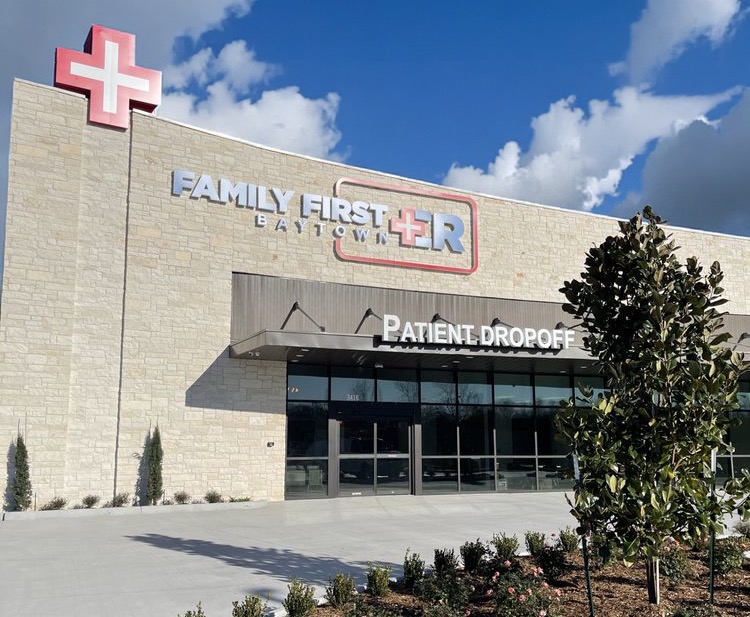
By the summer of 2025, the fully stabilized emergency care facility attracted acquisition interest. With regulatory risks resolved, a strong operating tenant in place, and reliable cash flow, the property had evolved from pandemic-era dirt into a durable healthcare investment.
The eventual sale delivered a 14% net internal rate of return (IRR) to investors—achieved not through aggressive leverage or speculative assumptions, but through steady execution and risk-aware decision-making.
A Case Study in Real Estate Discipline
The Baytown emergency care development may never have drawn headlines during construction, but its story resonates in today’s market. It illustrates a fundamental truth of real estate investing: challenges are inevitable; outcomes are not.
Infrastructure constraints, regulatory hurdles, and unexpected delays can derail even well-conceived projects. What separates successful outcomes is how sponsors respond when plans collide with reality.
For Zeus, the project reaffirmed a core philosophy: remain disciplined, manage actively, and act as a responsible steward of investor capital—especially in uncertain environments.
As many pandemic-era developments continue to face headwinds, the Baytown Family First Emergency Room stands as a reminder that thoughtful execution, even in crisis, can still deliver durable, risk-adjusted returns.
Learn more about Zeus Companies at https://ZeusCompanies.com